
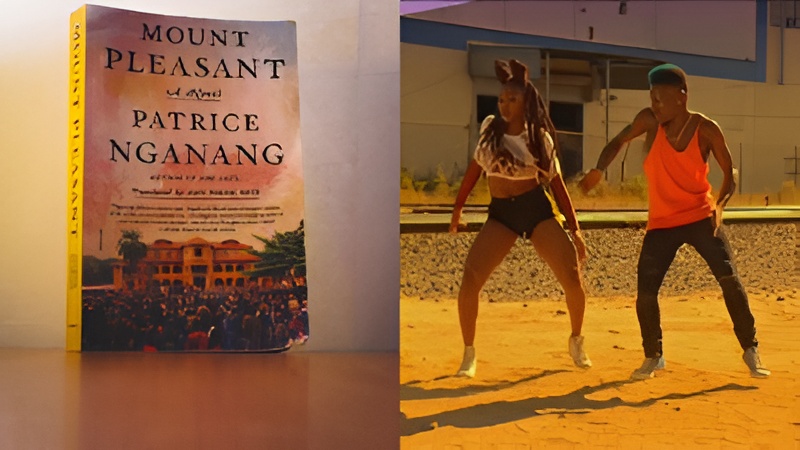
The story begins with a feint; the narrator, Bertha, lures us into expectation of some historical recount. From there on, she puts up a trap which try as you may, you simply cannot get away from.
First, she introduces us to Sara, a girl who was given to the Sultan, Njoya, for a wife at the tender age of nine, ironically as a demonstration of friendship between Njoya and paramount chief Charles Atananga. In Chapter two, three and four, we learn that we are seeing little Sara’s story through old Sara’s eyes; the narrator is a historian travelled from the United States to Nsimeyong, Cameroon, to dig up the origins of Cameroonian nationalism, only to get side-tracked by Sara’s story (which is also a feint, because Sara’s story is about the origins of Cameroonian nationalism). Sara, who has been mute for eighty years, suddenly speaks. Why? Because the narrator, Bertha, shares a name with someone from her past. That is how Sara’s story begins.
“I was prepared to swallow up Sara’s life, her whole world. The depth of her silence was an urgent invitation, and my questions were polite knocks at her door.”
When young Sara is given to the Sultan, she is first to be trained by Bertha. But there’s a problem; Bertha suddenly sees in Sara the reincarnation of her dead son, Nebu. So, instead of training Sara to be a wife, Bertha dresses the young girl up as a boy and presents her as a shadow to the Sultan — a slave boy who stays by the Sultan’s side at all times except when going to sleep.
In the following chapters, Nganang sets up a disorienting number of promises, little cliff-hangers with hooks that snag your garment as you fall, and a magically beautiful reimagination of the birth of modern-day Cameroon. Yes, Cameroon; a baby split in half because none of the two women claiming to be were really its mother, and therefore had nothing to lose in it. But as we learn through the stories of Sara and Bertha and Njoya and Atananga and numerous other characters with lives as round and full as yours and mine, the baby had something to lose. The baby had everything to lose …
This novel is a mesmerising work of prose and lyricism. The book weaves history, spirituality and time in a way that many readers will find new and refreshing. It reminds me of Jidenna’s Boomerang with its drums, face paintings, mustangs, trains and dancing. The translation done by Amy Baram Reid is meticulously beautiful and, in the end, has resulted in a colour-filled, though true and many times difficult, reimagination of historical events.
Highly recommended for lovers of historical fiction and lyrical story-telling.


Leave a Reply
You must be logged in to post a comment.